
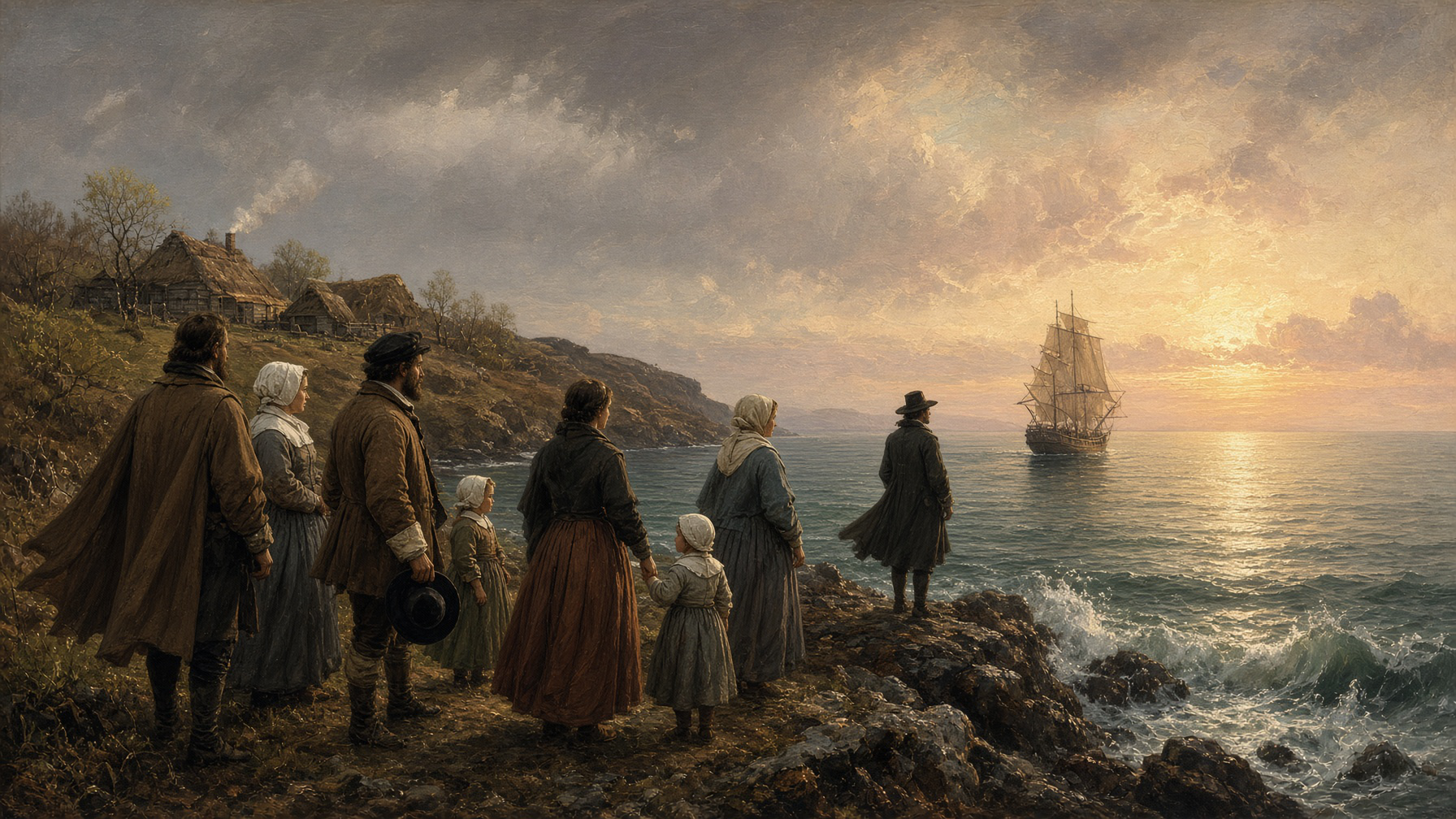
April 1621: The surviving Pilgrims watch the Mayflower sail for England. Not one of them chose to return.
A Harvest of Courage What the Pilgrims Teach Us About Gratitude
In the autumn of 1620, a small, weathered ship called the Mayflower carried 102 passengers across the North Atlantic. The voyage took sixty-six days. They were crowded below decks in cold, damp quarters, seasick and short on fresh food, bound for a coast none of them had ever seen. When they finally dropped anchor off Cape Cod in November, winter was already closing in.
What followed was one of the hardest seasons any group of Americans has ever endured. With little shelter and dwindling supplies, the settlers were struck by disease, exposure, and hunger. By spring, roughly half of them had died. At the worst of it, only a handful were healthy enough to tend the sick, haul water, and bury the dead.
And yet they stayed. When the Mayflower sailed back to England in April 1621, not one of the survivors went with it.
That decision tells us something about who they were. Their faith was not decoration; it was the ground they stood on. They believed their lives had purpose, that their suffering was not meaningless, and that they were not alone. With help from their Wampanoag neighbors, including Tisquantum, who showed them how to plant corn in New England soil, they made it through. That fall, after their first harvest, they gathered with the Wampanoag leader Massasoit and some ninety of his men for three days of feasting. They had buried half their number in less than a year, and still they chose to give thanks.
A Different Kind of Hard
It is tempting to hold that story up against our own lives and conclude that we have nothing to complain about. In many ways, the comparison is striking. Most of us will never wonder whether our children will survive the winter. We have heat at the turn of a dial, grocery stores stocked year-round, medicine the Pilgrims could not have imagined, and the ability to hear a loved one's voice from across the country in seconds.
But it would be unfair, and untrue, to say that modern life is easy. Many families today are carrying real weight: the rising cost of groceries and housing, work that never quite switches off, worry over aging parents and anxious kids, and a constant stream of news that can make the whole world feel unsteady. Stress and loneliness are no less real for looking different from frostbite and famine. They are simply a different kind of hard.
Perhaps that is the true gift the Pilgrims offer us. Not a scolding, but an example. They did not give thanks because their circumstances were comfortable. They gave thanks in the middle of hardship, as an act of courage and faith. Gratitude, for them, was not a feeling that arrived once everything was fine. It was a choice that helped them keep going.
Counting Our Blessings
This Thanksgiving, we can make that same choice. We can look around the table and see the faces we love. We can remember the people who helped us through a difficult year, just as the Wampanoag helped the settlers through theirs. And we can recognize that, even in uncertain times, we live amid an abundance the families at Plymouth could scarcely have dreamed of.
Gratitude does not erase our worries, but it puts them in their proper place. It reminds us that we are not the first to face hard times, and that those who came before us found strength in faith, in community, and in one another.
So this year, as we gather around tables heavy with food, let us honor the courage of those early settlers by following their example. Let us give thanks, not because life is perfect, but because it is good, and because we have so much to be grateful for.
Wishing you and your family a warm and joyful Thanksgiving.
B.R. O’Hagan